
Carbon Fiber
SAIWEI SPORTS’ flagship custom material route. Performance differences remain evidence-dependent.
8 size namesMOQ 1+Full personalizationDesign preview
Neither football shin guard material is universally “better” without examining the products. Both SAIWEI SPORTS routes support photos, names, numbers, text, artwork, different left/right images and a design preview. Compare real dimensions, live price and same-method product testing.
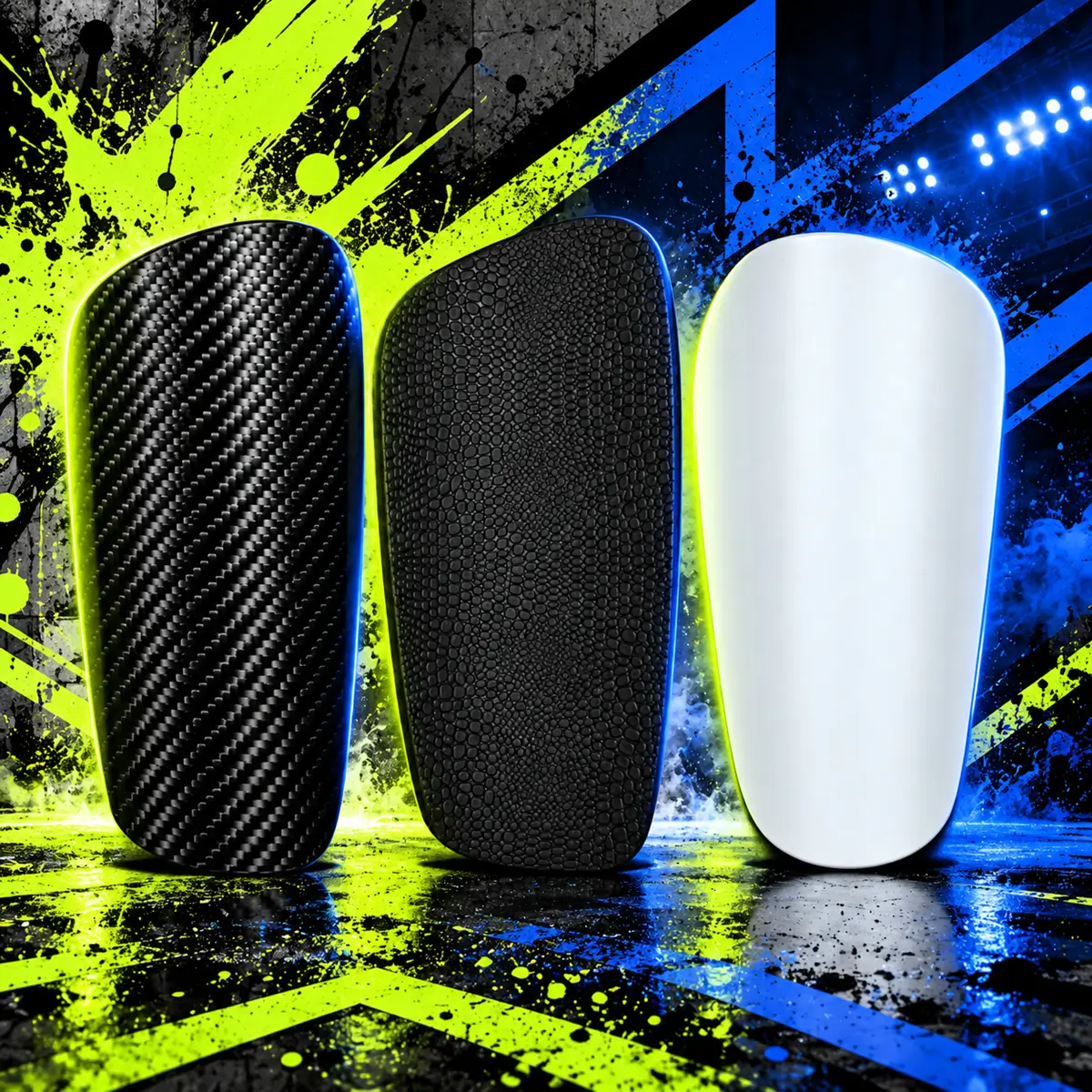
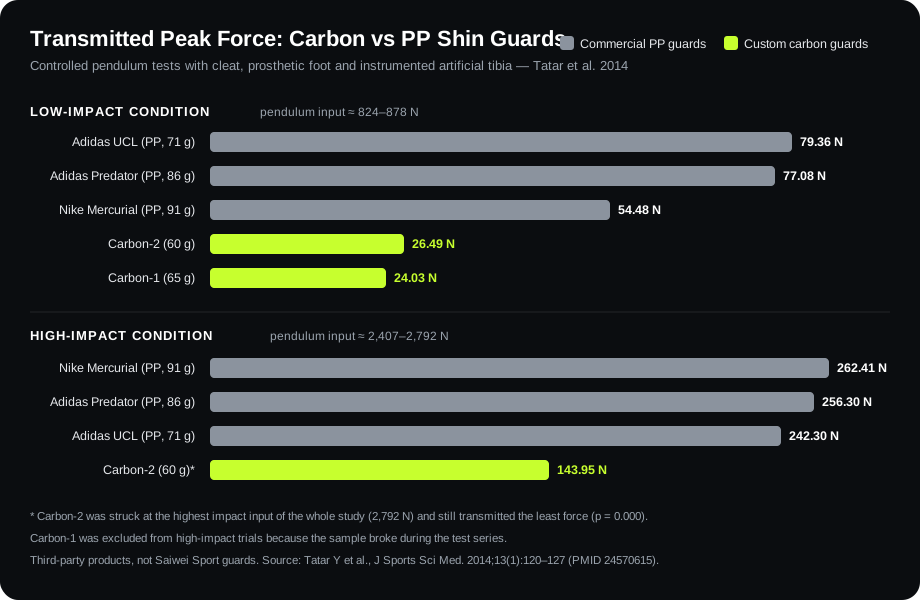
Choose carbon fiber if you specifically want SAIWEI SPORTS’ flagship carbon product and its premium material route. Choose PP plastic if you prefer the plastic product format or want the entry custom route. Do not decide from generic claims such as “carbon is always lighter” or “plastic is always safer.” Compare the actual size, current configured price and verified SAIWEI SPORTS test data. For published context: the only head-to-head lab study (Tatar et al. 2014, J Sports Sci Med) found custom carbon guards transmitted about 44% less peak force and 52–58% less impulse than commercial PP guards under matched high impacts, with ≈1 mm carbon shells at 60–65 g versus 3–4 mm PP shells at 71–91 g. Those were third-party products, not SAIWEI SPORTS guards, so our own first-party numbers remain pending.
The comparison below separates facts already confirmed for both products from measurements that still require first-party testing.
SAIWEI SPORTS’ flagship custom material route. Performance differences remain evidence-dependent.
SAIWEI SPORTS’ entry custom product route, using a polypropylene base and its own product dimensions.
| Decision Factor | Carbon Fiber Classic | PP Plastic | Evidence Status |
|---|---|---|---|
| Customization | Yes | Yes | Verified |
| Different left/right images | Yes | Yes | Verified |
| Design preview | Yes | Yes | Verified |
| Available size names | 7 (SUPER MINI–L) | 8 (SUPER MINI–XL) | Verified |
| Physical dimensions | Material-specific | Material-specific | Verified |
| MOQ | 1+ | 1+ | Verified |
| Product weight — per single guard, Classic line | 8–32 g (Classic line, Saiwei samples, n = 2 per size) | 12–91 g (Classic line, Saiwei samples, n = 2 per size) | First-party |
| Shell thickness — total construction incl. EVA | 5 mm on the finished guard | 5–8 mm on the finished guard | First-party |
| Weight & shell thickness — 2014 study samples | 60–65 g, ≈1 mm shell | 71–91 g, 3–4 mm shell | External study |
| Impact / force transmission | 143.95 N transmitted in 2014 study (high impact) | 242.30–262.41 N transmitted in 2014 study | External study |
| Print durability | Testing required | Testing required | Evidence pending |
| Live price | See current configuration | See current configuration | Dynamic |
“Lightweight” and “thin” are useful buying terms only when the actual products are measured under a defined method.
A valid result needs identified samples, physical dimensions, included components, scale, units, repeated readings and test date. Our samples were weighed individually, two per size.
Thickness must define measurement points, shell-only versus total construction, the tool, repeat count and surface variation. Both lines were measured as total construction, with the EVA foam bonded in.
Product-specific protection claims require an actual Saiwei impact setup, measured variable, repeat count and visible limitations.
Both products can be customized. A durability winner needs comparable scratch, rubbing, water, sweat or handling tests.
The current IFAB Laws require shinguards to use a suitable material, be an appropriate size to provide reasonable protection and be covered by socks. Those rules do not say carbon is automatically better than polypropylene, or vice versa.
Comfort and fit are influenced by height, width, curvature, shell thickness, backing, retention and the amount of physical coverage the player prefers.
| Size | Carbon Fiber Classic W × H · weight / guard · thickness | PP Plastic W × H · weight / guard · thickness |
|---|---|---|
| SUPER MINI | 7.5 × 6 cm · 9 g · 5 mm | 8 × 6 cm · 15 g · 5 mm |
| MINI XS | 5.5 × 8 cm · 8 g · 5 mm | 5 × 8 cm · 12 g · 6 mm |
| MINI S | 6.5 × 10 cm · 11 g · 5 mm | 6 × 9.5 cm · 18 g · 6 mm |
| JUNIOR | 8 × 12 cm · 17 g · 5 mm | 8 × 11.5 cm · 28 g · 6 mm |
| S | 7 × 15 cm · 20 g · 5 mm | 7.5 × 15 cm · 36 g · 7 mm |
| M | 8 × 17 cm · 26 g · 5 mm | 8.5 × 16.5 cm · 52 g · 7.5 mm |
| L | 8.5 × 19 cm · 32 g · 5 mm | 9.5 × 19 cm · 64 g · 7.5 mm |
| XL | — | 10 × 20.5 cm · 91 g · 8 mm |
Carbon and PP thickness are both measured on the finished guard, including the bonded EVA foam layer, so the two columns are on the same basis. Carbon fiber is not made in XL. Measurements are first-party readings taken from production samples. Published figures are nominal: actual weight may differ from the value shown by up to ±5 g per guard and each dimension by up to ±3 mm through production tolerance, and further with batch and storage time.
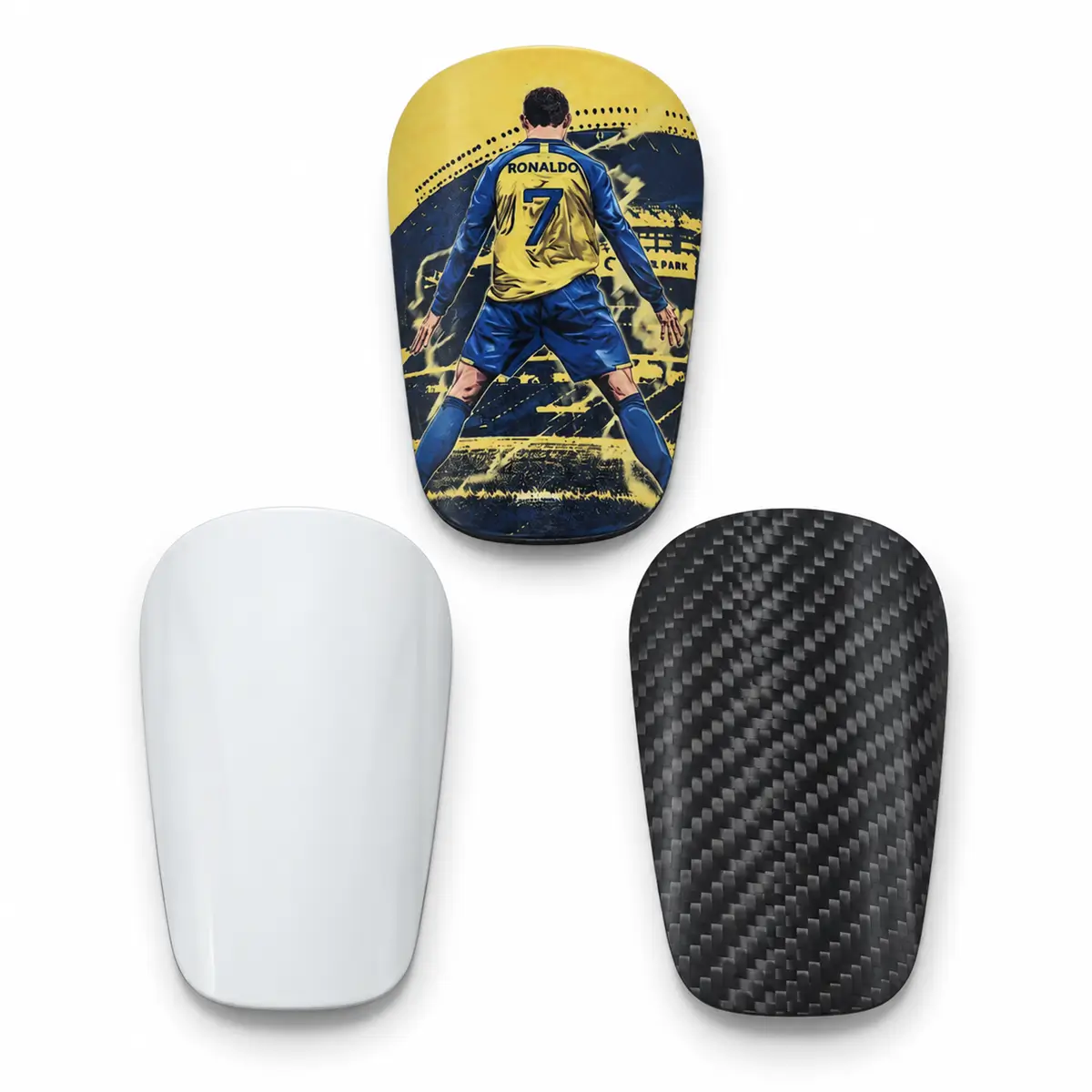
Material choice does not need to be driven by whether one product can be customized and the other cannot. Both routes support the same confirmed personalization system.
The more useful question is whether the finished decoration behaves differently in use. A fair print comparison can examine initial sharpness, color appearance, edge consistency, scratch resistance, rubbing durability, water exposure, sweat exposure and repeated handling.
Use material preference, real dimensions, current price and published evidence. The two product routes are presented at equal visual weight.
Consider the carbon route when the carbon base itself is part of what you want to buy and you want to evaluate the flagship product on its own evidence.
Do not choose carbon only because of a generic claim that it is always lighter or always more protective.
Explore Custom CarbonConsider PP plastic when you prefer the plastic product format, one of its dimensions, or SAIWEI SPORTS’ entry custom route.
Do not assume plastic is automatically cheaper, safer, lighter or more durable.
Explore Custom PlasticA useful comparison should show what was tested, how it was tested, the result and what limits the conclusion.
Open Testing & ResearchWhen first-party results are added, avoid choosing from one headline number without looking at the sample, method and limitations.
Weight is most useful when the products are close in physical size and the measurement includes the same components. Different backing, padding or construction must be stated.
Weight should identify grams, thickness should identify millimeters and measurement points, impact should identify the measured variable and setup, and print tests should define the repeatable exposure or rub protocol.
A useful result says when it may not apply: one size tested, limited samples, dimension mismatches, laboratory conditions or production-batch differences.
Even if one product later measures lighter or thinner, value still depends on current configured price, preferred size and shape, whether the difference matters to you, your design and your budget.
Direct answers for the most common Carbon-versus-Plastic decision questions.
Neither material is universally better for every buyer. Carbon fiber is SAIWEI SPORTS’ flagship material route, while PP plastic is the entry custom route. Compare the actual size, live price, and verified weight, thickness, impact, fit, and print-durability data before deciding.
SAIWEI SPORTS’ first-party weights are published: one Classic carbon guard weighs 8–32 g and one PP plastic guard weighs 12–91 g across their size runs, with two samples weighed per size. The carbon and PP products do not have identical dimensions at every shared size label, so a fair answer must compare one named size against another; the overall ranges overlap and neither material is declared lighter in general. For context, in the 2014 lab study the custom carbon samples (60–65 g, ≈1 mm shells) were lighter than the commercial PP samples (71–91 g, 3–4 mm shells), but those were third-party products.
Tatar et al. 2014 (J Sports Sci Med, PMID 24570615) is the only direct comparison we found: two custom carbon guards versus three commercial PP guards on the same pendulum rig with instrumented artificial tibias. Under matched high impacts the carbon guard transmitted 143.95 N of peak force versus 242.30–262.41 N for the PP guards, about 44% lower, with 52–58% lower impulse. It did not test SAIWEI SPORTS products, so we cite it as context for our own test design, not as a Saiwei result. Full tables and method: Testing & Research.
SAIWEI SPORTS has published first-party thickness readings. Classic carbon measures 5 mm and PP plastic measures 5–8 mm, both as total construction on the finished guard with the bonded EVA foam layer in place. The two figures therefore share one basis and can be read against each other. They still describe different shell materials and different size runs, so neither material is declared thinner in general.
Both carbon fiber and PP plastic support photos, names, numbers, text, artwork, different left/right images and a design preview. Which finished print is more durable requires the same scratch, rub, water or sweat test on the actual products.
It depends on the live price difference and whether the carbon product’s measured characteristics matter to you. Compare the configured prices on the two product pages against the measured weight and thickness figures above before deciding.
Start with the product route that matches your material preference, dimensions and budget. PP plastic is positioned as the entry custom option; carbon fiber is the flagship option. Both support the same main personalization features. If you are unsure, compare current configured prices and published test evidence before choosing.
Use real product data rather than the material name alone. Both routes support custom designs and an MOQ of 1+. Weight, thickness, impact, print durability and price comparisons should reflect the actual SAIWEI SPORTS products and current evidence.