
01
Select one physical guard of the size being recorded and read its sample ID label.
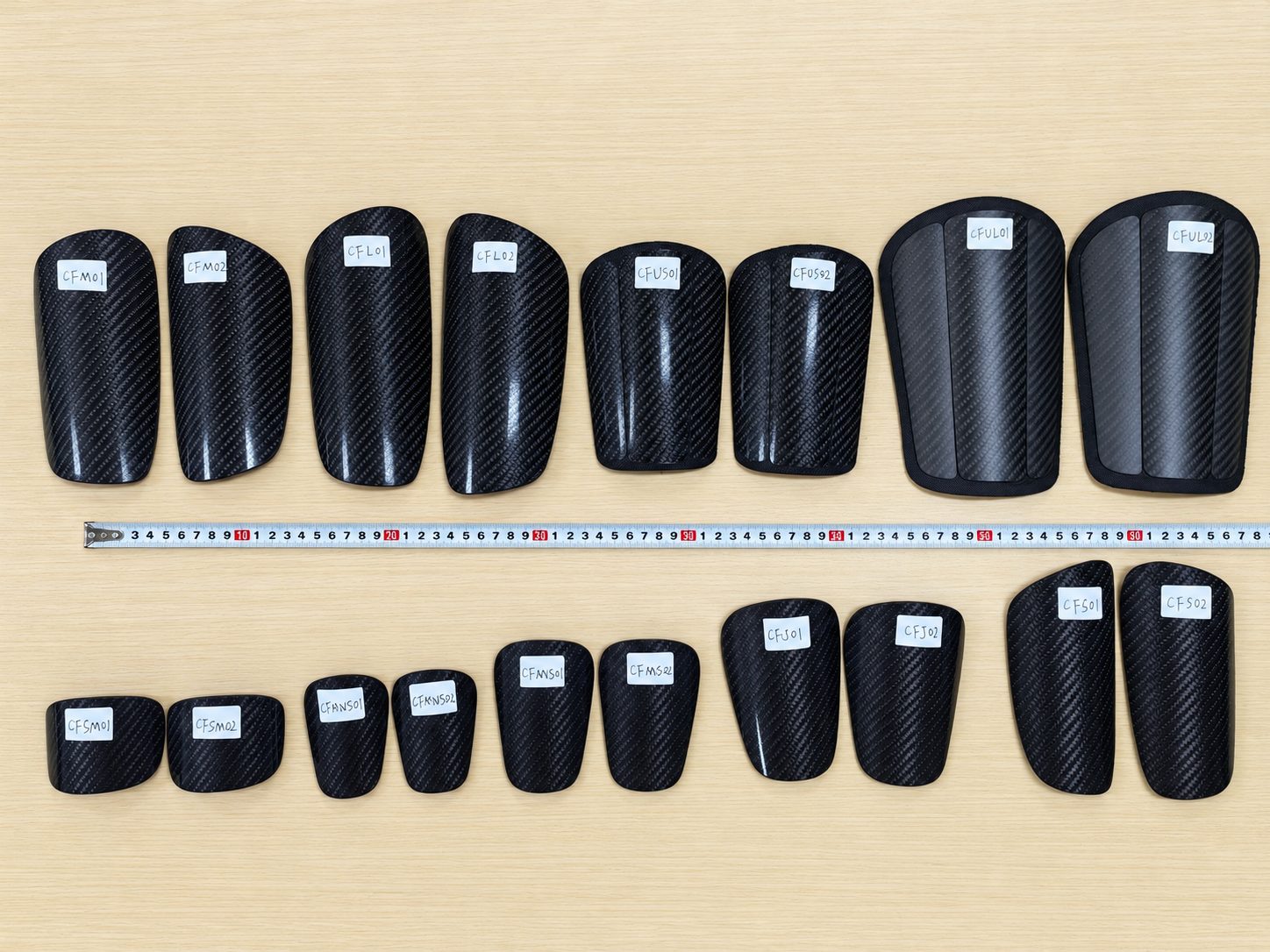
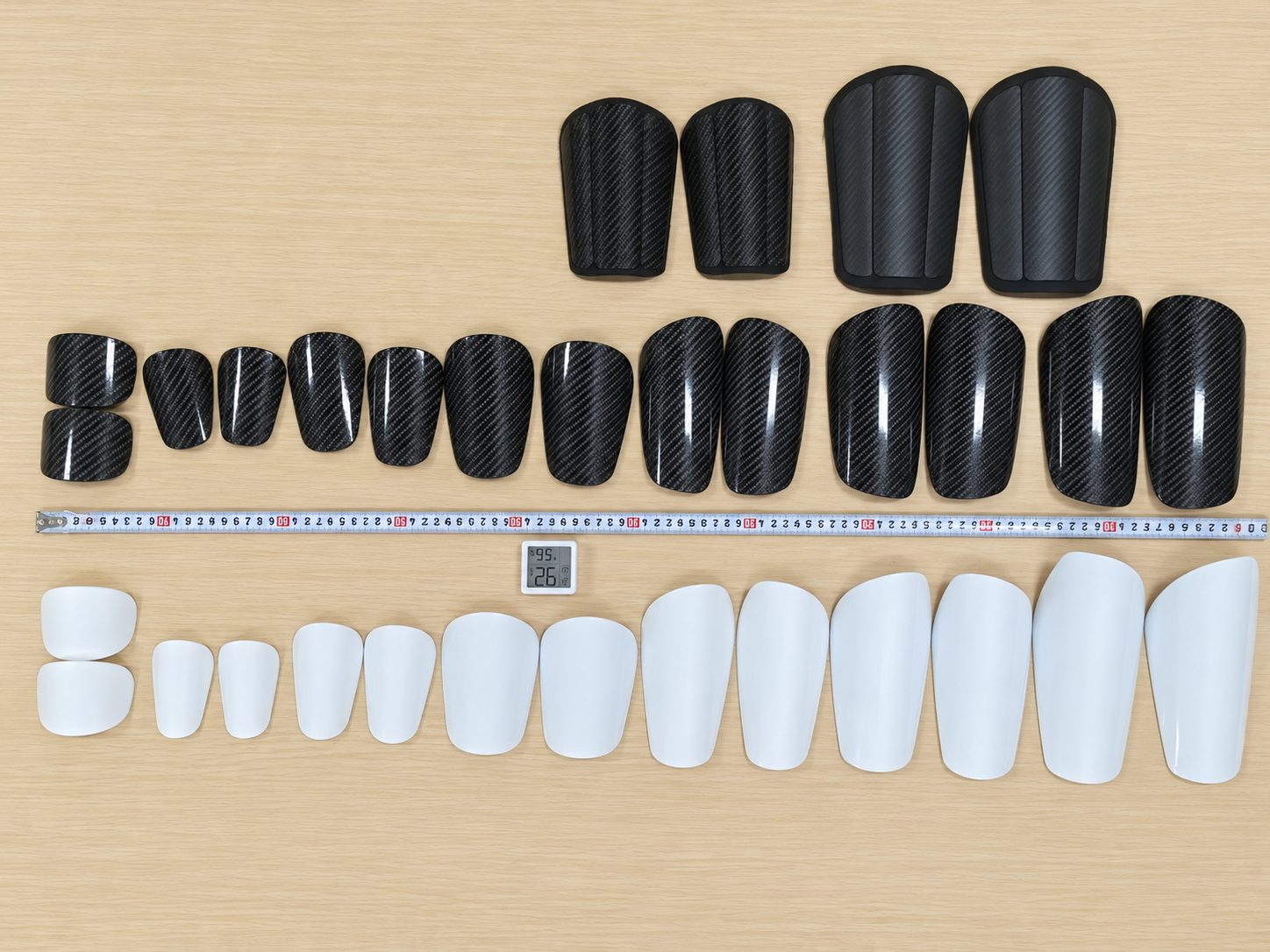
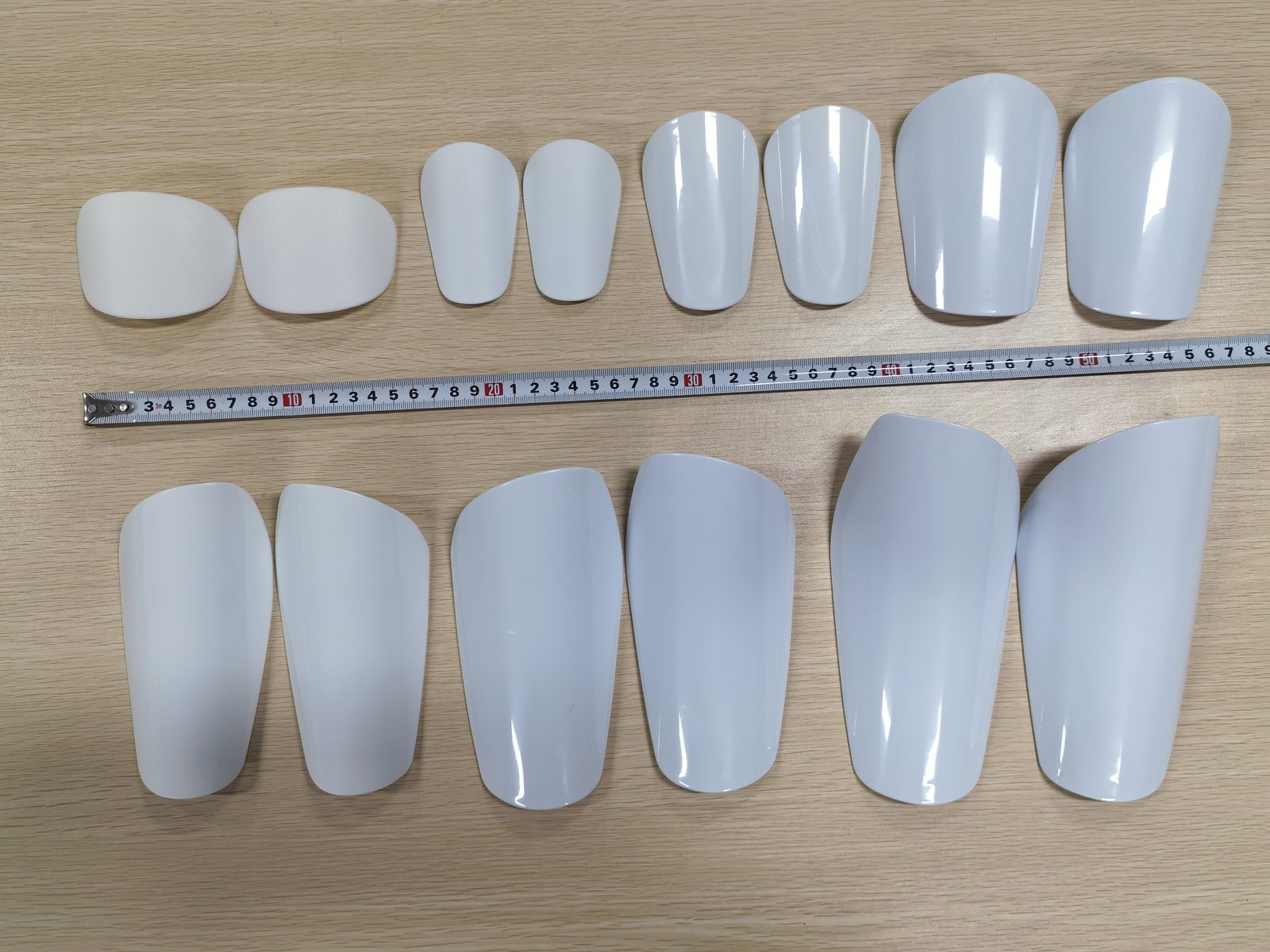
Every size SAIWEI SPORTS sells was weighed as a physical production sample. Two guards were weighed per size, each guard separately, and both individual readings are published below rather than a single summary figure. Weight is recorded per guard — not per pair.
One complete guard as shipped. Every row — Carbon Fiber Classic, Carbon Fiber Ultra and PP plastic alike — is weighed with the bonded EVA foam layer in place, so the three lines share one construction basis.
Select one physical guard of the size being recorded and read its sample ID label.
Place that single guard on the gram scale, with the EVA foam layer attached on carbon rows.
Record the stable reading in grams, to the precision shown.
Repeat on a second guard of the same size and record the second reading separately.
Retain both individual readings; the mean column is derived from them and is not a substitute for them.
Both individual readings are published on the row they belong to. The mean is derived from those two values and is shown for convenience only — a figure that cannot be traced back to a reading on this page is not evidence.
7 sizes · 14 guards weighed
2 sizes · 4 guards weighed
8 sizes · 16 guards weighed
Individual per-guard weight readings for all 17 sizes across the three product lines, in grams. 34 guards weighed, two per size. Means are derived from the two readings shown on the same row. The two readings are published to 0.1 g as recorded; the mean is rounded to the nearest whole gram, so it can differ from the exact average of the pair by up to 0.5 g. Every row is weighed on the finished guard with the bonded EVA foam layer in place, so the carbon and PP figures share one construction basis. The mean is the expected value for its size and is nominal: through production tolerance an individual guard can weigh up to ±5 g either side of the figure shown.
| Material | Size | Sample ID | Reading 1 (g) | Reading 2 (g) | Mean (g) | Construction |
|---|---|---|---|---|---|---|
| Carbon Fiber Classic | Super Mini | CFSM01 / CFSM02 | 8.8 | 9.6 | 9 | With EVA foam |
| Carbon Fiber Classic | Mini XS | CFMXS01 / CFMXS02 | 7.7 | 7.8 | 8 | With EVA foam |
| Carbon Fiber Classic | Mini S | CFMS01 / CFMS02 | 10.6 | 10.4 | 11 | With EVA foam |
| Carbon Fiber Classic | Junior | CFJ01 / CFJ02 | 16.5 | 16.9 | 17 | With EVA foam |
| Carbon Fiber Classic | S | CFS01 / CFS02 | 20.1 | 19.2 | 20 | With EVA foam |
| Carbon Fiber Classic | M | CFM01 / CFM02 | 25.4 | 27.5 | 26 | With EVA foam |
| Carbon Fiber Classic | L | CFL01 / CFL02 | 32.5 | 32.3 | 32 | With EVA foam |
| Carbon Fiber Ultra | Ultra S | CFUS01 / CFUS02 | 35.1 | 34.1 | 35 | With EVA foam |
| Carbon Fiber Ultra | Ultra L | CFUL01 / CFUL02 | 59.3 | 60.9 | 60 | With EVA foam |
| PP Plastic | Super Mini | PPSM01 / PPSM02 | 15.1 | 15.2 | 15 | With EVA foam |
| PP Plastic | Mini XS | PPMXS01 / PPMXS02 | 12.1 | 12 | 12 | With EVA foam |
| PP Plastic | Mini S | PPMS01 / PPMS02 | 17.8 | 17.9 | 18 | With EVA foam |
| PP Plastic | Junior | PPJ01 / PPJ02 | 27.5 | 27.6 | 28 | With EVA foam |
| PP Plastic | S | PPS01 / PPS02 | 35.5 | 35.6 | 36 | With EVA foam |
| PP Plastic | M | PPM01 / PPM02 | 51.5 | 51.6 | 52 | With EVA foam |
| PP Plastic | L | PPL01 / PPL02 | 63.7 | 63.8 | 64 | With EVA foam |
| PP Plastic | XL | PPXL01 / PPXL02 | 91.2 | 91.4 | 91 | With EVA foam |
Each row is one size: the Sample ID cell names both guards that were weighed, and Reading 1 and Reading 2 are that pair, in the order listed. Measurements are first-party readings taken from production samples. Published figures are nominal: actual weight may differ from the value shown by up to ±5 g per guard and each dimension by up to ±3 mm through production tolerance, and further with batch and storage time.
The table on this page and the downloadable CSV are two views of the same measurement record. This test publishes those readings; it does not restate them.
| Limitation | Effect on interpretation |
|---|---|
| n = 2 guards per size, from single-factory production samples | Supports a per-size reading, not a statistical tolerance or a batch average. Individual guards of one size can differ from each other. |
| EVA foam is included on every row, but the foam spec is not recorded per line | The construction basis matches across carbon and PP, so a difference is no longer explained by one side being a bare shell. Foam grade and thickness were not measured separately, so a difference still cannot be attributed to the shell material alone. |
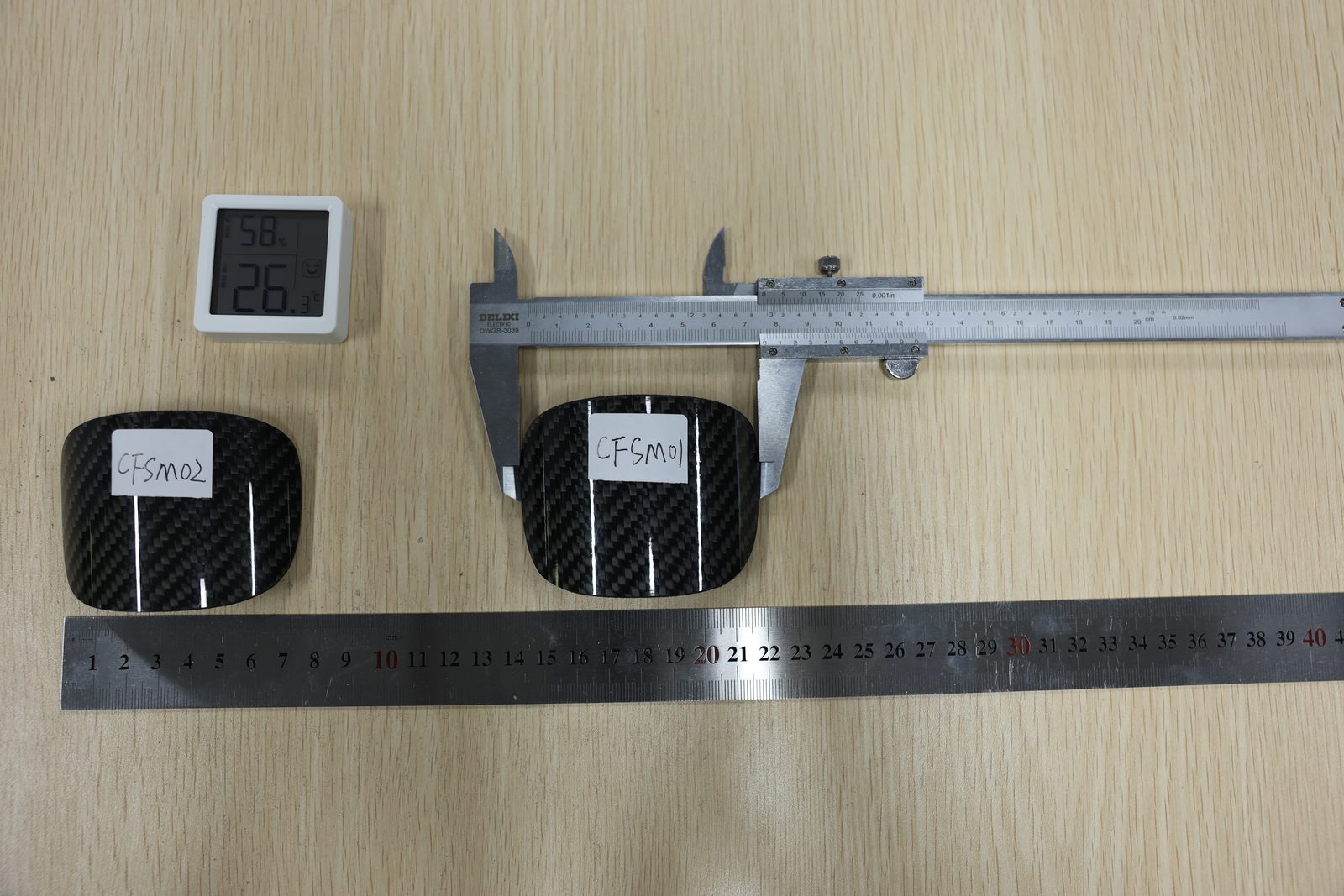
| Scale model and calibration record are not recorded; instrument not photographed | The readings are traceable to a sample and a session but not to a documented instrument. Treat the figures as production readings rather than certified laboratory values. |
| Sizes are not dimensionally matched across product lines | Rows that share a size name still differ in measured width, and the lines do not share a size run. Read the figure with its own size row, not as a like-for-like material comparison. |
| Single factory; PP plastic rows revised after the carbon rows were read | No cross-batch, cross-site or storage-age variance is captured here, and the three product lines were not all read in one sitting. |
| Published figures are nominal: ±5 g per guard on weight and ±3 mm per dimension | The value on a row is the expected value for that size, not a weight the unit that ships is guaranteed to match. A given guard can weigh up to 5 g either side of the figure shown, so read the row as the size expectation and not as a per-unit promise. |
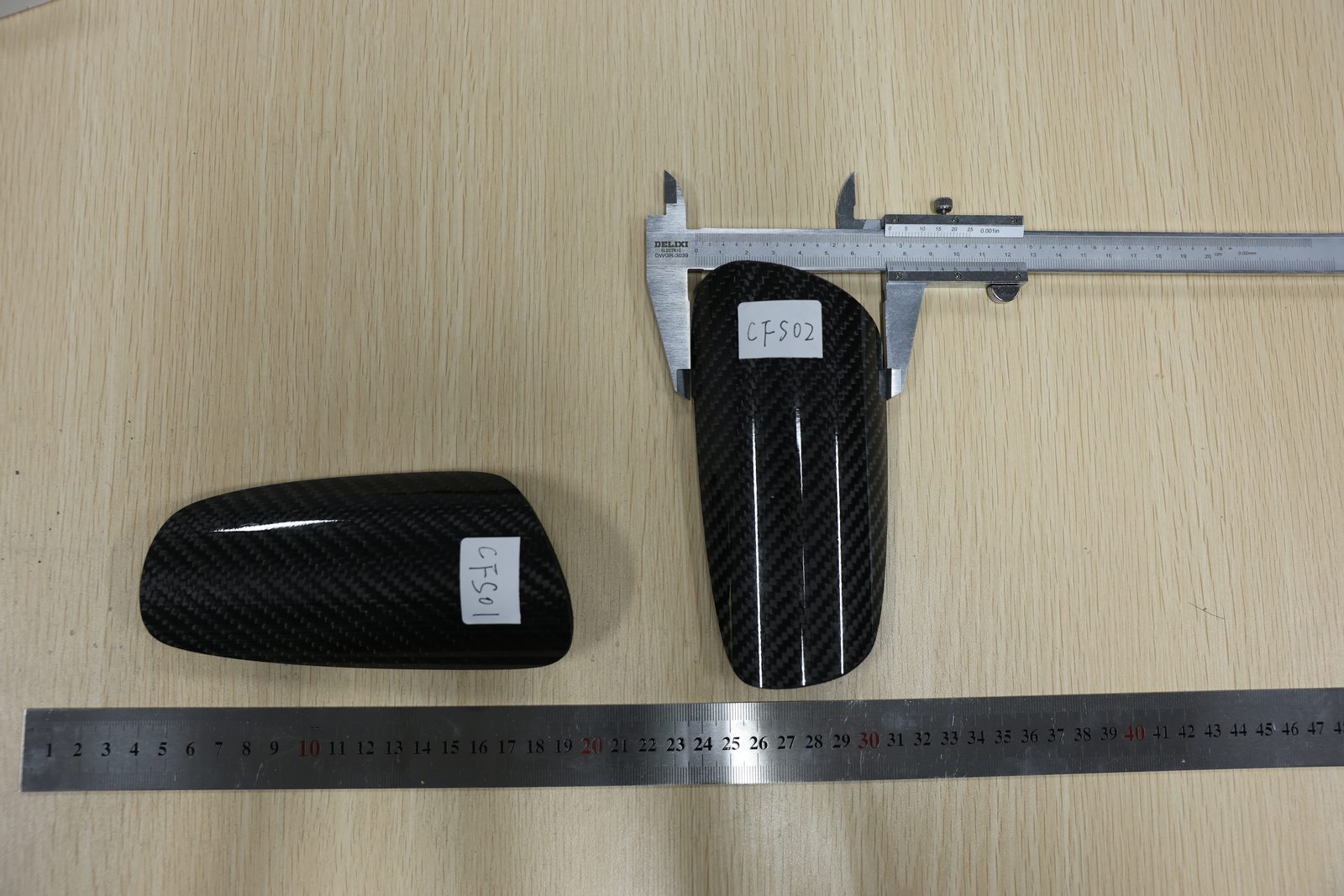
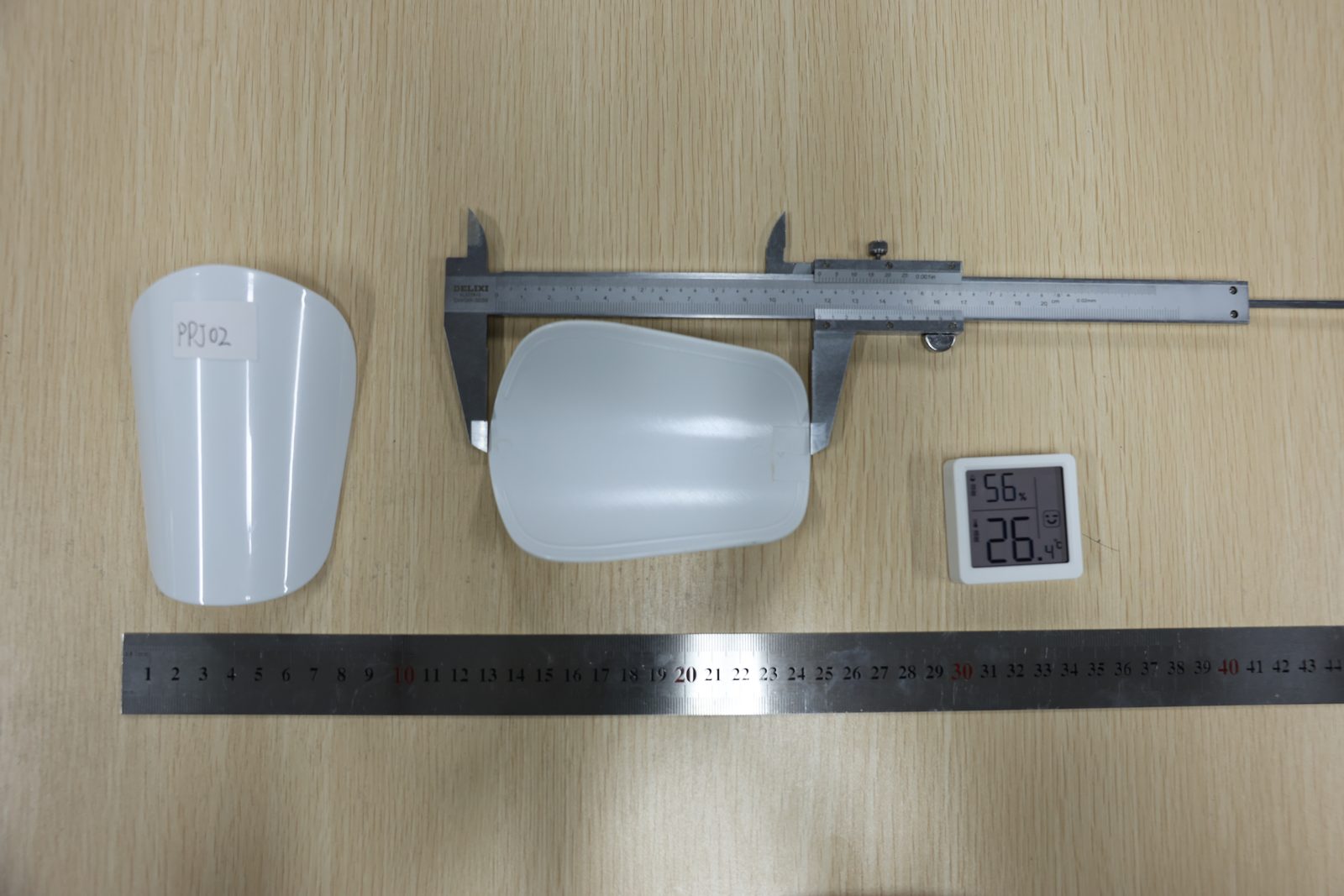
These photographs document which physical guards were measured and the conditions visible at the time. They are not a photograph of the weight reading itself — no photograph of the scale readout was retained, which is why evidence gate item 07 is shown as partial.
Answers are limited to what the recorded evidence supports.
The measured weight is one input. Sizing, construction and the coverage you want decide the rest.